We needed a better way to manage training. The harder question was deciding what we were actually building for.
I owned the problem definition, build-vs-buy analysis, vendor evaluation, pilot design, recommendation, commercial negotiation and phased implementation.
As we were a small team, we took most decisions together. When someone felt strongly about a feature, they had to test their hypothesis to validate or disprove it.
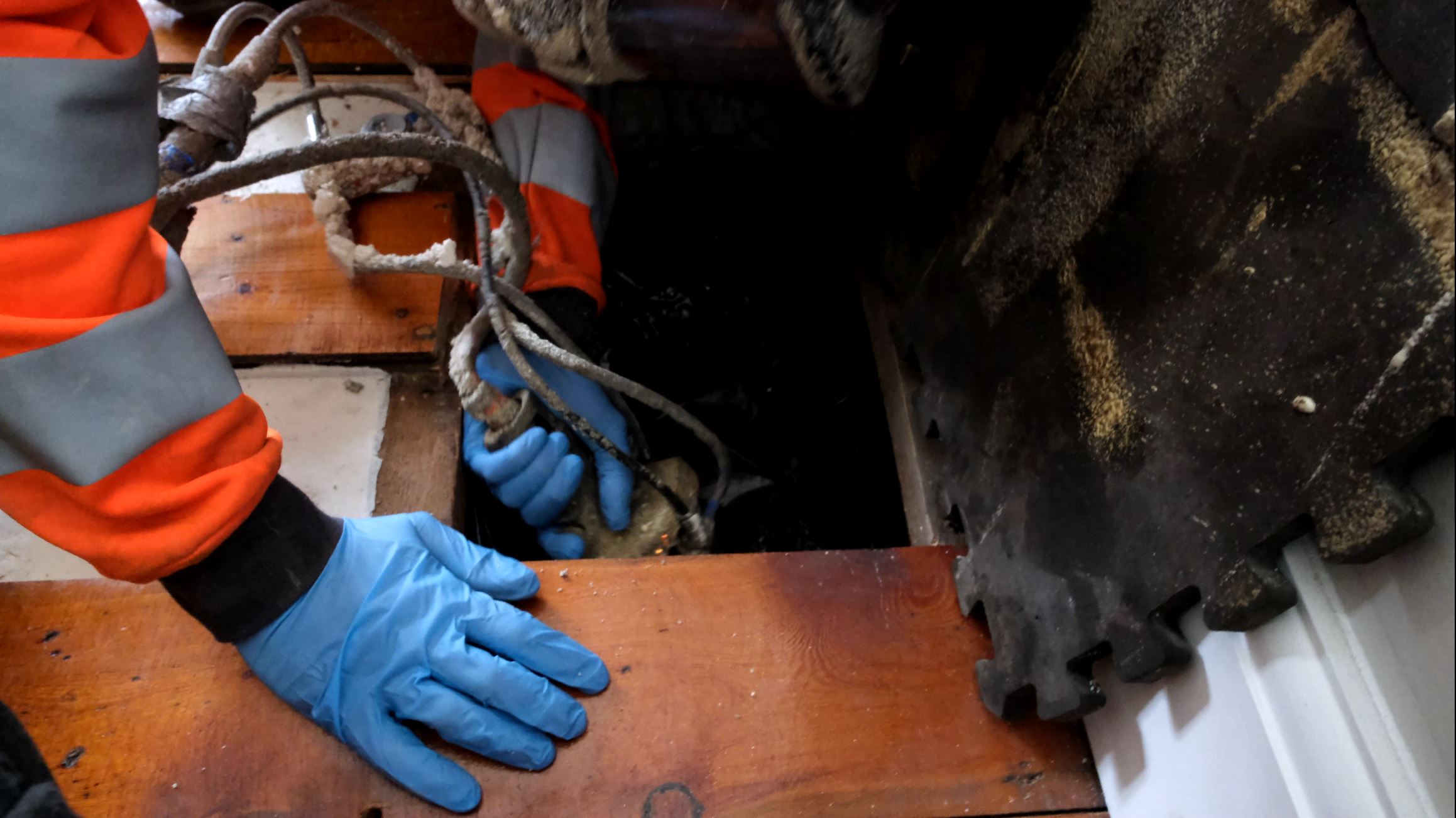
Q-Bot installs underfloor insulation in confined spaces, which means dealing with safety and compliance requirements.
Training already existed, but the infrastructure didn't. Courses lived in PDFs and guides; completion was tracked in spreadsheets; refresher and competency records were maintained manually by depot managers and the training team.
The company was also scaling through partners. Every new partner multiplied a process that was already heavily administrative.
The trajectory was problematic.
The initial brief was an installer companion app. Through cross-team discovery, we established that the underlying need was broader.
The same infrastructure required to support:
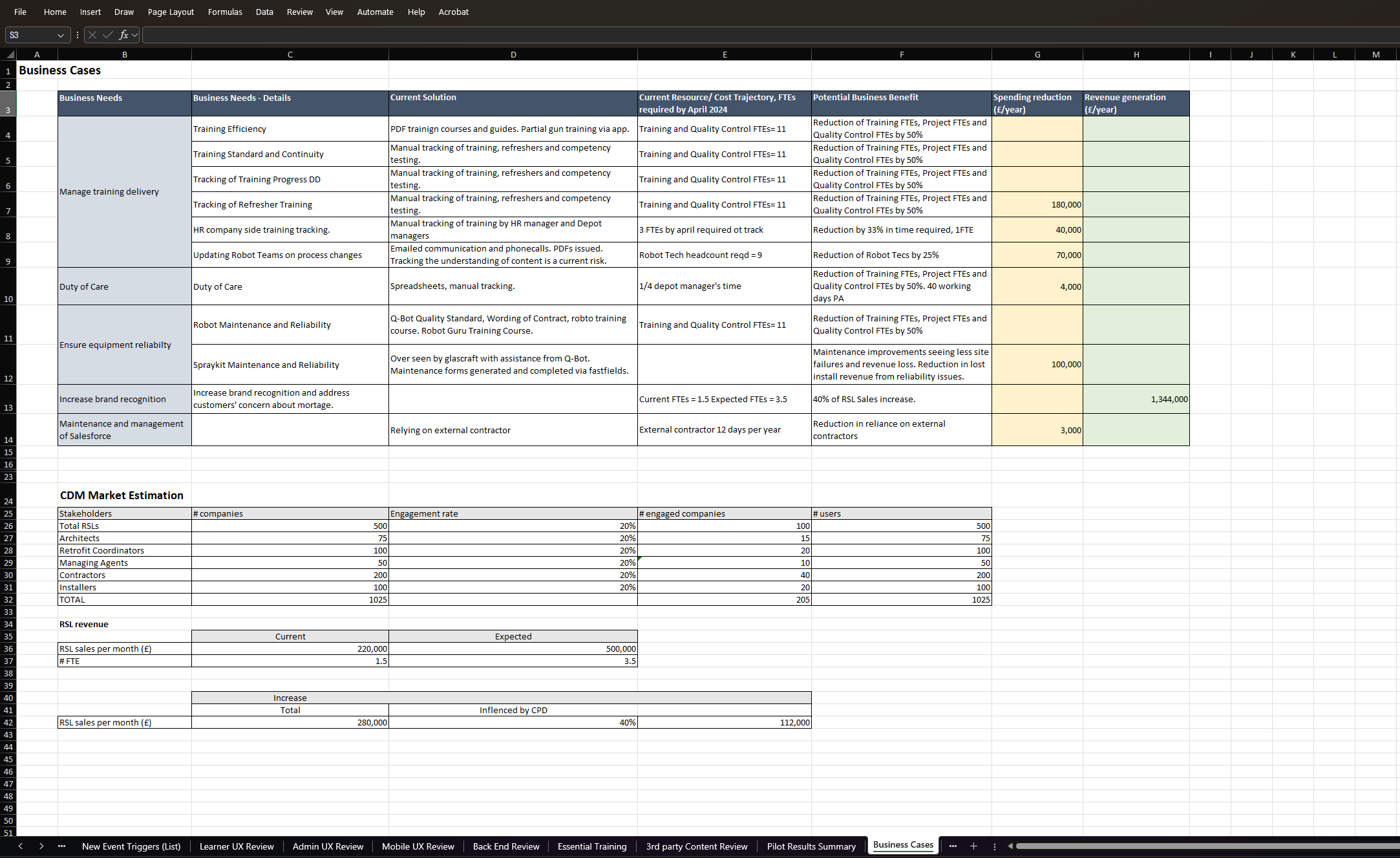
The fourth audience changed the business case. The first three primarily reduced operational cost; CPD could influence revenue by helping housing associations, retrofit coordinators, architects, managing agents and contractors understand a new retrofit technology.
The team estimated nearly £400k/year in operational savings and £1.34m/year in potential revenue influence.
That opportunity shaped the platform decision, and later exposed the biggest weakness in our thinking.
With our engineering team focused on other projects, we explored whether to build the LMS ourselves or buy from a third party. My research quickly showed that the core feature set was largely commoditised.
I defined 12 initial requirements including multi-device support, SSO and integration with our existing systems. Several off-the-shelf platforms met most of our requirements, so we closed build-vs-buy quickly.
Evaluate the architecture
Vendor feature grids looked similar. The differentiators emerged in technical discussions.
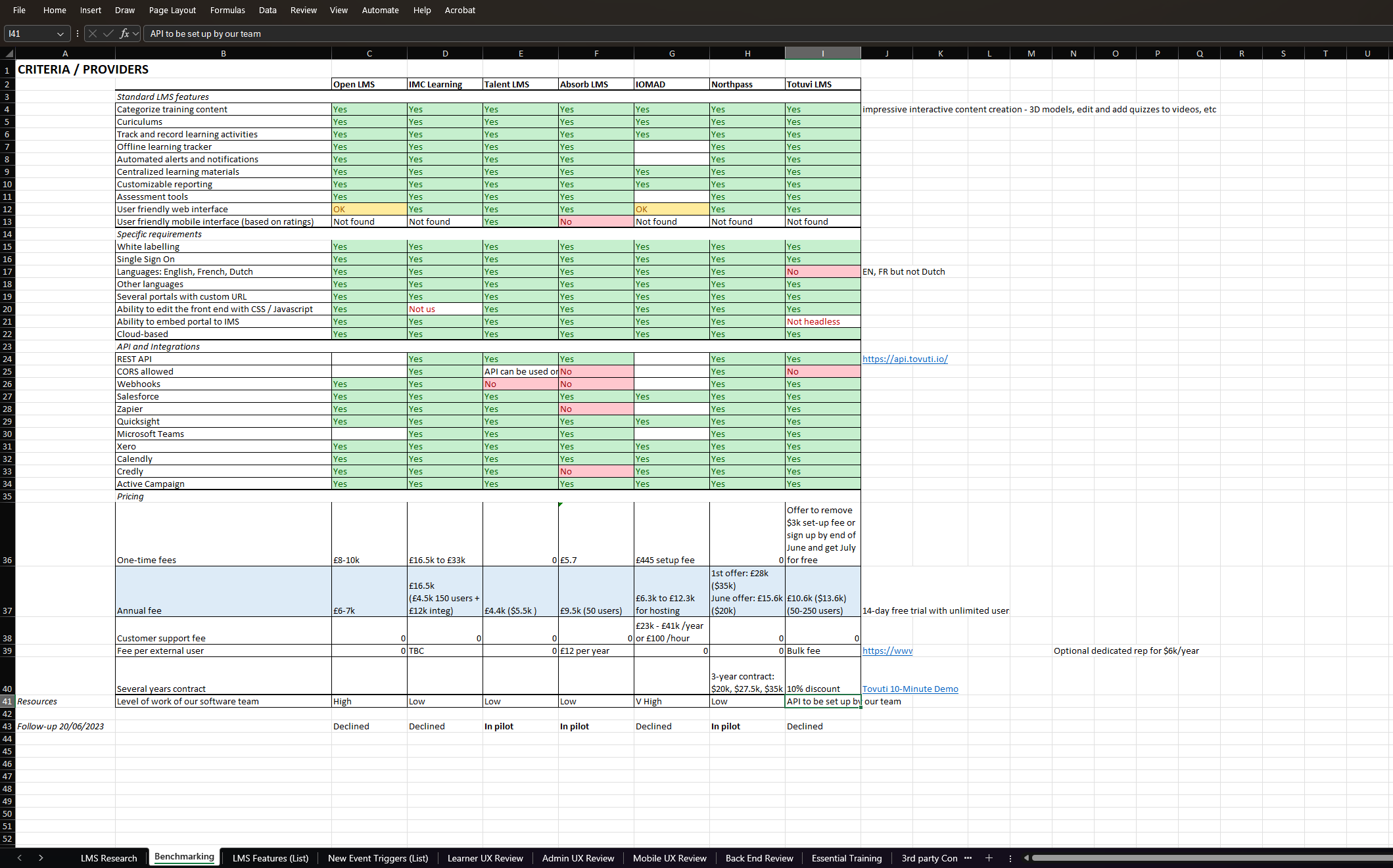
I added requirements around APIs, authentication, webhooks, CORS and integration with our existing tools. This eliminated options that looked attractive on paper but would create significant engineering or support overhead.
12 platforms reviewed → 7 benchmarked → 3 piloted
I set the down-select criteria in advance: product fit, integration capability, low internal engineering dependency and total cost.
Make the pilot answer specific questions
Rather than asking which platform people liked most, I separated the pilot into four questions:
Installers tested the learner experience. Platform administrators tested authoring and user management. Engineering assessed API, authentication, webhooks and GDPR.
The result wasn't simply a winner. It gave us a clearer specification for the dashboard we actually needed.
I recommended the most expensive option.
Under a 100-user scenario it cost almost twice the cheapest option. But its unlimited-user pricing made it significantly more attractive if the projected external growth materialised.
The strategic choice was straightforward: if we believed the £1.34m revenue opportunity, choosing a platform optimised only for the low-user scenario would undermine the strategy.
I negotiated a one-year contract with 10% discount rather than committing to a two-year deal. That preserved the option to reassess once we had evidence that the commercial opportunity was real. This became one of the most valuable decisions in the project.
We also had to accept known limitations. The platform lacked some desired requirements, but the pilot made these gaps explicit. That gave us the evidence to decide which trade-offs we were willing to accept.
The platform went live in August 2023, with internal and external course rollout beginning in October.
What we achieved:
What we did not achieve:
The subscription was ended in November 2024 following a change in company direction. The one-year contract meant we could exit without being tied into a longer commitment.
The projected revenue opportunity was not realised, not because the product couldn't support it, but because we didn't have the organisational capacity to make it happen.
I scoped to the size of the opportunity rather than the size of the committed resource.
What I'd do differently:
The flexibility to reverse the decision after one year was ultimately more valuable than any feature on the comparison grid.
Next project →I'm currently building side projects and am always happy to discuss or get involved in problem-solving challenges. Have something in mind? Get in touch.
Email me