Quality & Compliance System for Field Operations
Halving time to access critical data and enabling to scale and maintain the platform

Context
The platform supports the management of underfloor insulation surveys and installations across distributed field teams.
Over time, it evolved without a coherent design system or information architecture. As a result:
- User experience became inconsistent
- Core workflows required unnecessary navigation
- The platform became increasingly difficult to scale and maintain
Alongside a backend migration, we redesigned the frontend to improve usability, scalability and accessibility across the system.
My role: Solo Product Designer and Product Owner
Challenge
The platform had evolved without a clear information architecture or design system, creating a growing disconnect between how the system was structured and how users needed to operate in practice.
This resulted in:
- Fragmented workflows requiring navigation across multiple screens
- Poor visibility and access to critical information
- Redundant features adding unnecessary complexity
- Long loading times impacting operational efficiency
As the product scaled, these issues made the platform increasingly difficult to maintain, extend and use effectively in real-world operational contexts.
Approach
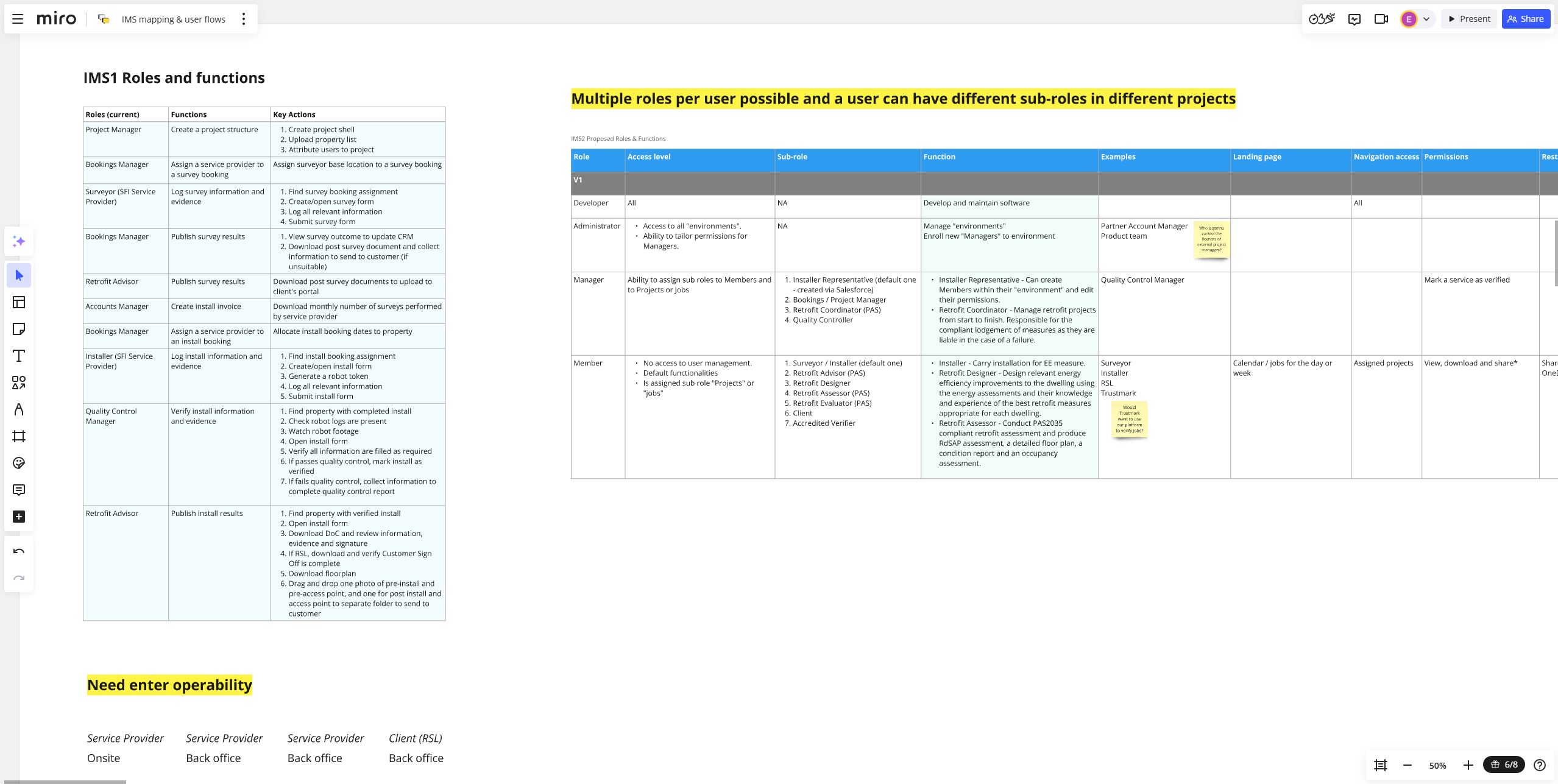
To support a shift in market positioning, I defined two primary user groups with distinct but overlapping needs:
- Project Managers: coordinating surveys and installations
- Technicians: executing work in the field
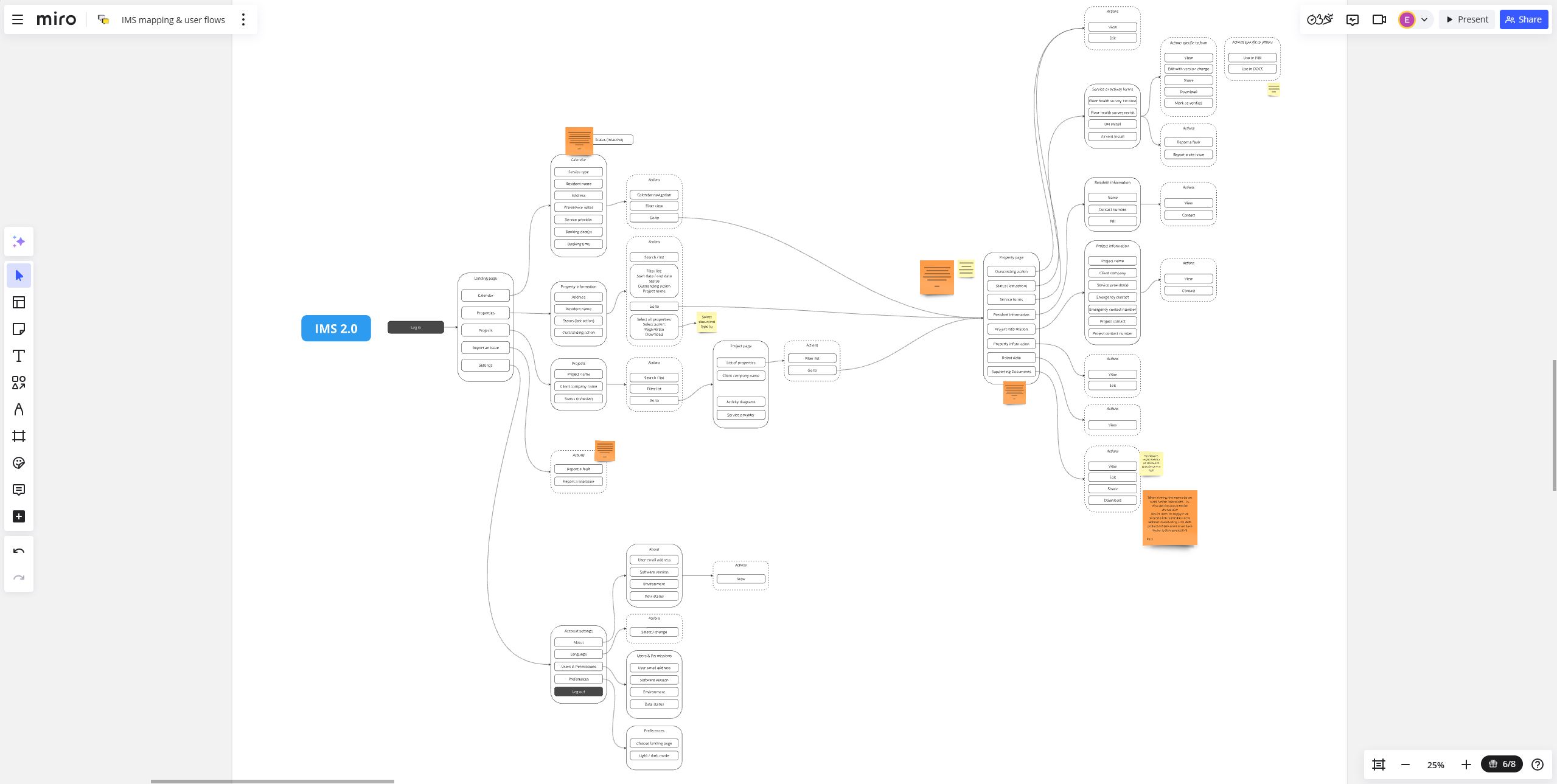
This helped prioritise essential system capabilities and define a clearer structural foundation, including:
- Key system entry points (e.g. property listing and property pages)
- Enabling features such as deep linking across workflows
Information architecture:

Designing for scalability and clarity
The design approach focused on simplifying complexity while ensuring the system could scale with new use cases.
This included:
- Creation and evolution of a design system to support consistency and scalability
- Iterative exploration through low-fidelity wireframes
- Benchmarking patterns from established products (e.g. search and navigation systems)
- Continuous validation with operational users
- Close collaboration with engineering to align on technical constraints
- Creation and evolution of a design system to support consistency and scalability
Deep Dive: Property Page (Core Operational Interface)
The Property Page is a critical point in the system, used to access and manage all project-related information.
The original interface had evolved incrementally, resulting in:
Limited scalability as new features were added
- High interaction cost
- Poor information hierarchy
- Limited scalability as new features were added
Previous workflow:

Design Approach
Rather than a full redesign, I restructured the information architecture to better reflect how users access and prioritise information in real-world contexts.
Key improvements included:
- Removing low-value features to reduce cognitive load
- Grouping high-frequency information for immediate access
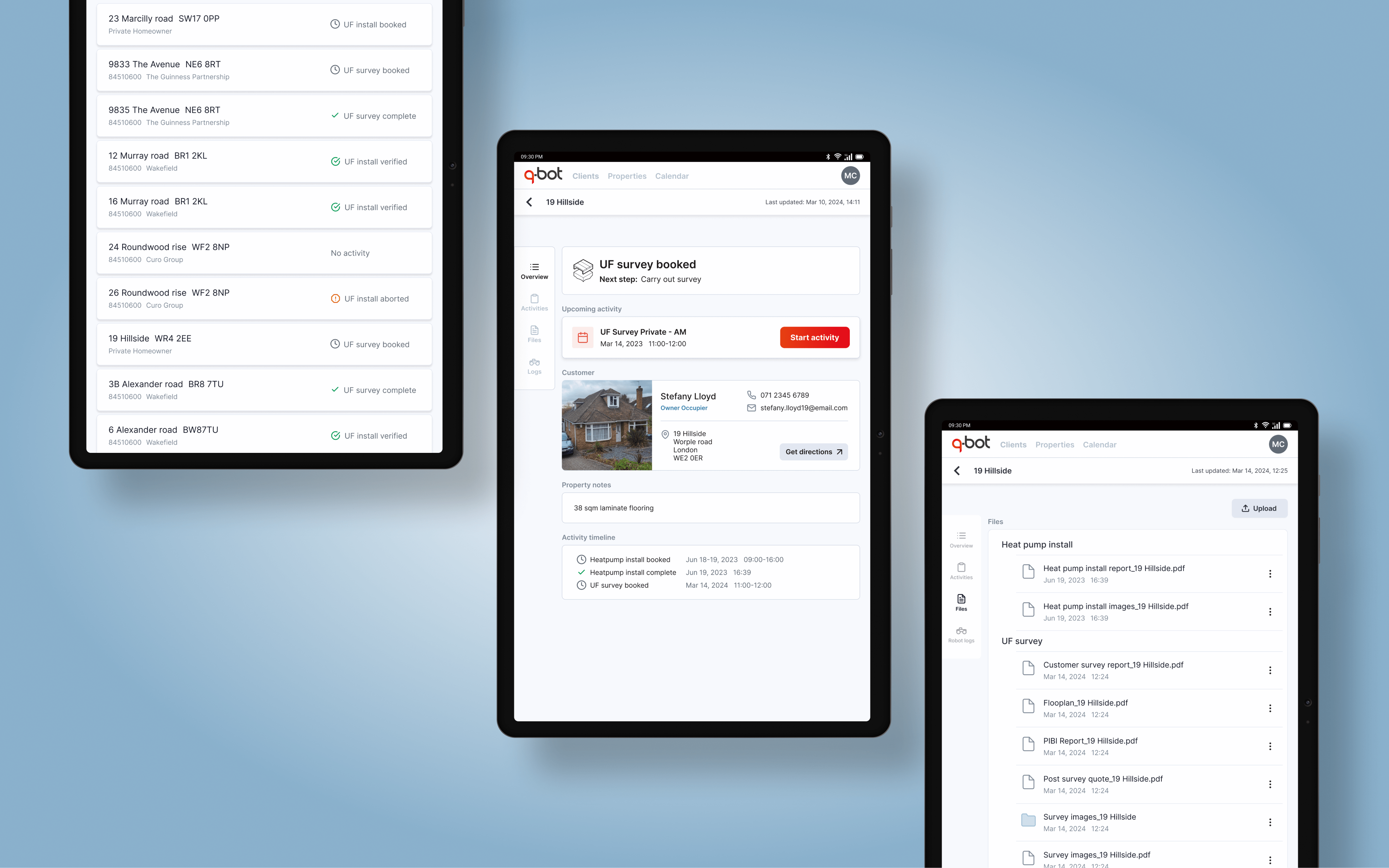
- Introducing clearer hierarchy and separation of data (property vs customer)
- Adding contextual elements (e.g. property image, client name) to support orientation in the field
- Designing scalable navigation (including vertical secondary navigation) to accommodate growing system complexity
Selected screens from design development:

Latest design:

Impact
The redesigned system improved how users navigate and interact with complex data sets:
- 50% reduction in time to access critical information
- Clearer mental models for navigating system workflows
- Improved usability and accessibility across the platform
- Reduced complexity, supporting more efficient ongoing development
The platform is now deployed across the company and its accredited installation partners, supporting real-world operations at scale.
- Quicker and easier access to key data, making onsite operations smoother and reducing frictions
- Reduced software development costs for the business
Key Takeaways
- Designing for operational systems requires aligning user workflows with system structure, not just interface improvements
- Small structural changes in information architecture can have significant impact on efficiency and usability
- Scalable design systems are essential when products evolve across multiple use cases and user groups